
Updated 2026 · History & Culture · 6 min read
There is a place in central Macedonia, about an hour south of Skopje, where two rivers meet and the ruins of an entire Roman city rise from the earth.
Above all, it is a place where history feels immediate. Theatres. Basilicas. Mosaics so detailed and intact they look almost newly laid. Streets that Roman citizens walked two thousand years ago, still visible under the Macedonian sun.
This is Stobi. And surprisingly, almost nobody outside Macedonia knows it exists.
While the Acropolis in Athens manages thousands of visitors daily, Stobi receives only a handful. As a result, you can walk through a Roman theatre, stand in front of extraordinary mosaics, and explore one of the most important ancient cities in the region almost entirely alone.
If you are travelling in Macedonia and have access to a car, Stobi is not optional. It is essential.
What Is Stobi?
Stobi is an ancient archaeological site located at the meeting point of the Crna and Vardar rivers in central Macedonia.
In essence, it was one of the most important cities in the Roman province of Macedonia — a major urban centre with theatres, basilicas, bath complexes, villas, and structured streets.
The city was continuously inhabited from the 3rd century BC to the early medieval period. At its peak, it minted its own coins and hosted a bishop, placing it at the centre of both commercial and religious life.
Today, it remains one of the best-preserved archaeological sites in the Balkans. However, it is also one of the least visited — which, in many ways, makes it even more special.
The History — From Paeonian Settlement to Roman Power
To begin with, Stobi’s story starts long before Rome. The site was first settled by the Paeonians, who recognized its strategic position between two rivers.
Later, when Rome expanded into the Balkans in the 2nd century BC, Stobi transformed into a fully developed Roman city.
As a result, theatres, forums, baths, and residences were built. The city grew wealthy thanks to its position on key trade routes.
By the 4th century AD, Stobi had also become an important early Christian centre. Multiple basilicas were constructed, each decorated with intricate mosaics.
However, earthquakes in the 5th and 6th centuries gradually led to its decline. Eventually, the city was abandoned and covered by earth — preserved for centuries.
Excavations began in the 20th century and, importantly, continue today. Even now, parts of the city remain undiscovered.
What You Will See at Stobi
The site is large, organized, and easy to explore. In general, allow at least two hours, although three is ideal if you want to take your time.
The Theatre
The Roman theatre is one of the best-preserved in the Balkans.
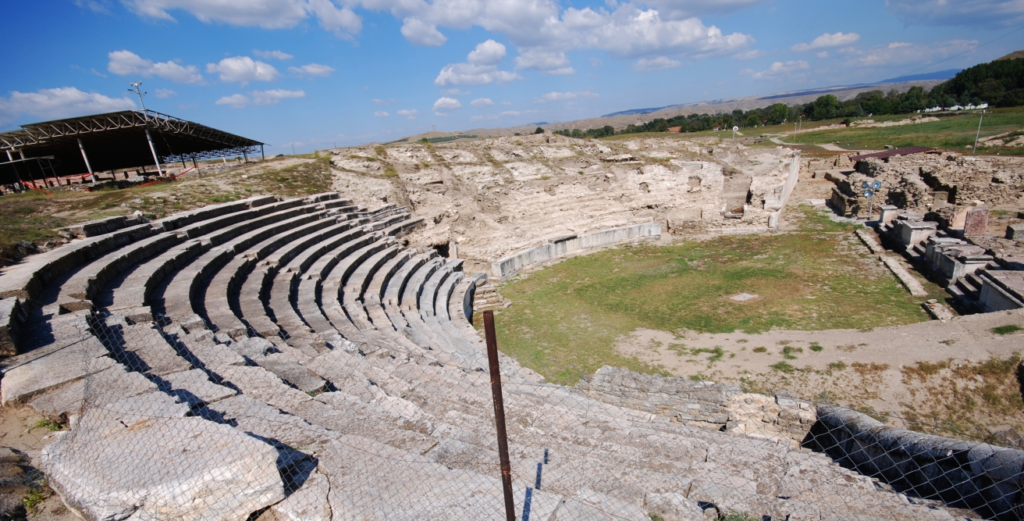
Built into the natural slope, it once hosted performances and public events. Standing at the centre of the stage, looking up at the empty rows, creates a powerful connection to the past.
The Forum and Streets
The central forum and main streets clearly show Roman urban planning.
In other words, you can see how the city functioned — from public spaces to residential areas — all still visible today.
The Bath Complex
The bath complex reveals the technical sophistication of Roman engineering.
Most notably, the hypocaust system — underfloor heating — can still be seen, offering insight into daily Roman life.
The Episcopal Basilica
The basilica and bishop’s residence reflect Stobi’s importance as a Christian centre.
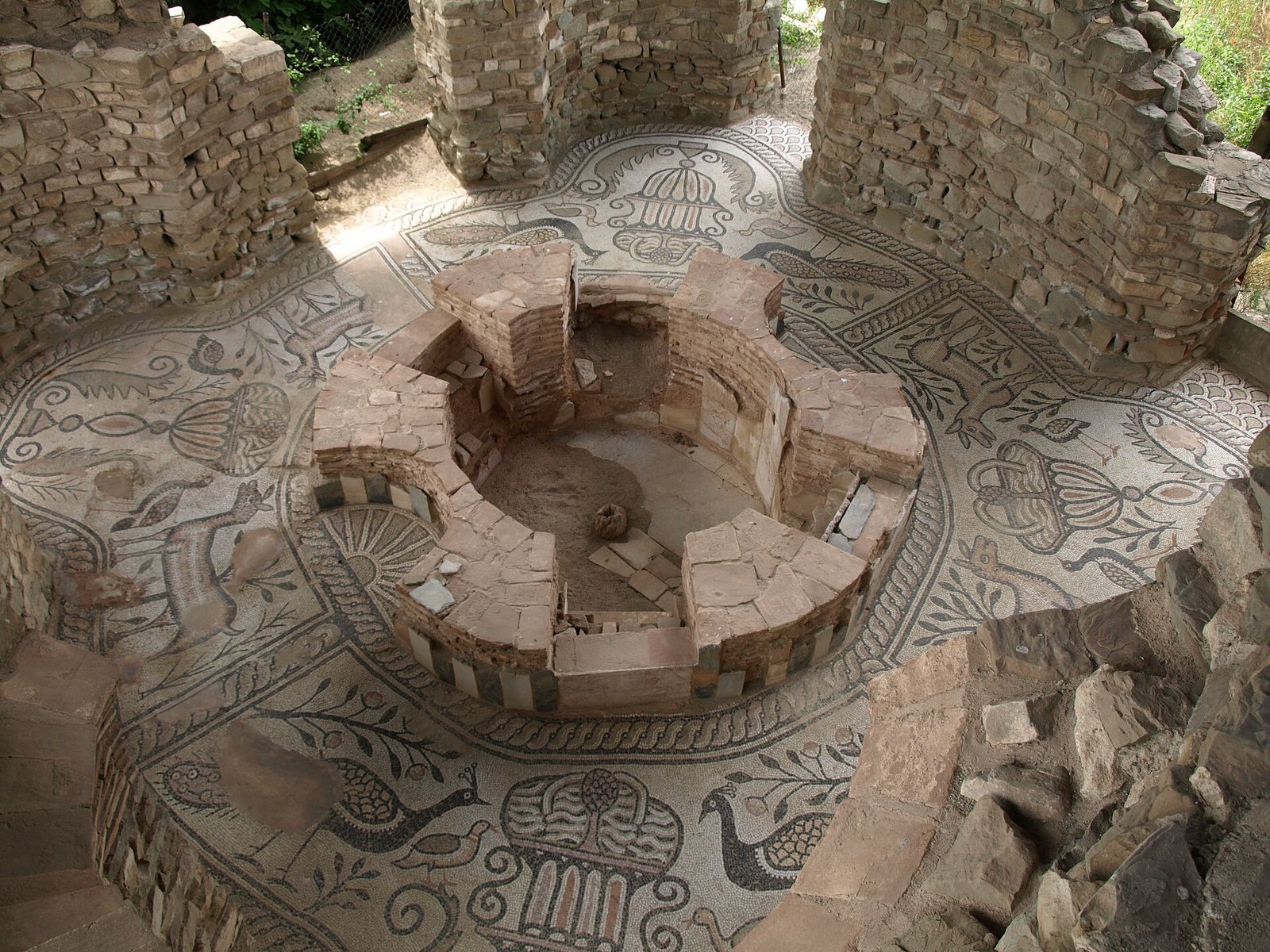
The baptistery, in particular, remains well-preserved and visually impressive.
The Mosaics — The Main Reason to Visit
Without a doubt, the mosaics are the highlight of Stobi.
Dating back to the 4th and 5th centuries, they cover floors with geometric patterns, animals, and early Christian symbols.
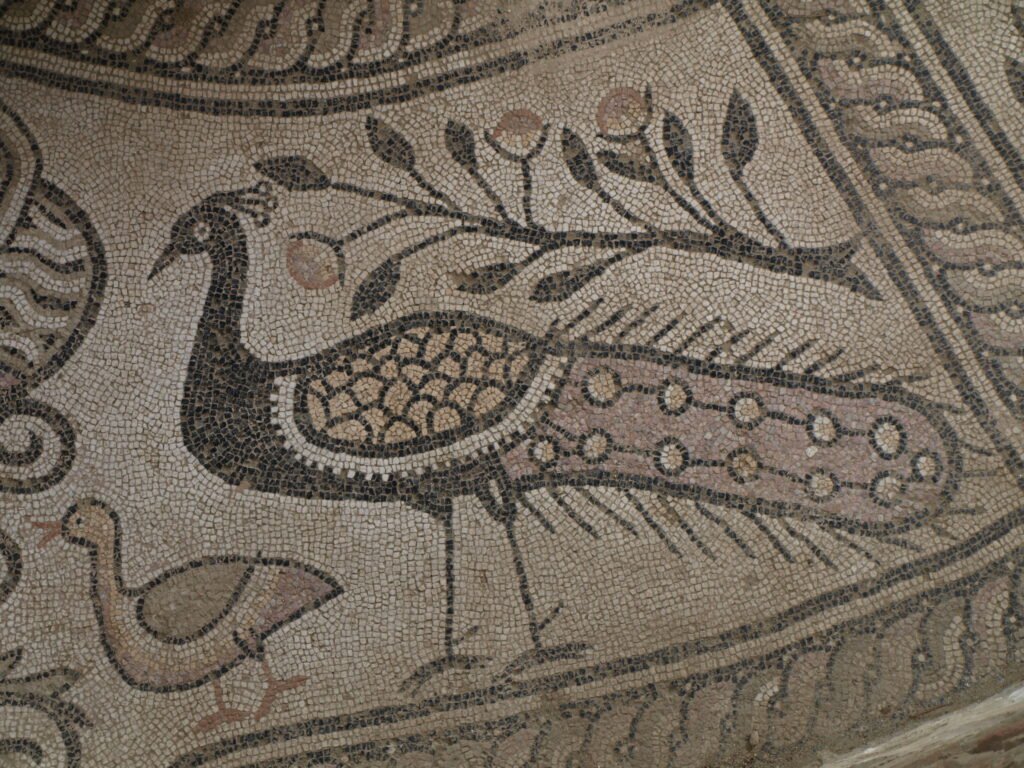
What’s more, the level of detail and preservation is exceptional — comparable to some of the best in Europe.
However, unlike famous sites in Rome or Istanbul, here you can stand directly above them, often completely alone.
That is what makes Stobi unique.
How to Get There
Stobi is located about one hour south of Skopje, near the town of Gradsko.
It sits directly on the E75 highway, making access straightforward.
However, a car is essential, as there is no regular public transport to the site.
When to Visit
Since Stobi is an open-air site, timing matters.
Spring: Ideal weather, fewer visitors.
Summer: Very hot — visit early morning.
Autumn: Cooler temperatures and beautiful colors.
Winter: Open, but with limited access in some areas.
Combine Stobi with a Road Trip
Stobi fits perfectly into a south Macedonia road trip.
Day 1: Skopje → Stobi → Bitola (visit Heraclea Lyncestis)
Day 2: Bitola → Ohrid
This route offers a complete experience of Macedonian history and landscape.
Practical Information
Location: Near Gradsko, central Macedonia
Time needed: 2–3 hours
Entrance fee: Very affordable
What to bring: Water, sun protection, comfortable shoes
Getting there: Car only
FAQ
Is Stobi worth visiting?
Yes — even for non-history lovers, the scale and atmosphere make it unforgettable.
How does it compare to other Roman sites?
In terms of importance, it matches many famous sites — but without the crowds.
Can children visit?
Yes, although summer heat should be considered.
Is there accommodation nearby?
The closest options are Veles, Negotino, or Skopje.
Disclosure: MKGuide uses affiliate links to help keep this site free. If you book through our links, we may earn a small commission at no extra cost to you. All opinions are based on real local knowledge of Macedonia.
Leave a Reply