
Updated 2025 · Local Guide · 8 min read
Everyone visits Skopje. Everyone goes to Ohrid. And both are absolutely worth it — but Macedonia is a much bigger and more varied country than the tourist trail suggests.
Beyond the two headline destinations, there are places that most visitors never find — villages with extraordinary stories, lakes that rival Ohrid for beauty with a fraction of the visitors, ancient sites so undervisited they feel like personal discoveries, and towns that carry a cultural weight far above their size.
These are the hidden gems of Macedonia. Some are easy to reach. Some require a car and a willingness to leave the main road. All of them are worth it.
Vevčani — The Village That Declared Its Own Independence
Vevčani is one of the most extraordinary small communities in the Balkans, and almost nobody outside Macedonia knows it exists.
Tucked into the mountains above the Struga plain, not far from Ohrid, Vevčani is famous for two things. The first is its natural springs — cold, clear mountain water that has been flowing through the village for centuries, channelled through stone channels and feeding gardens and fountains throughout the settlement. On a hot summer day, the sound and sight of all that running water gives the village a completely unique atmosphere.
The second is its spirit. In 1991, as Yugoslavia was dissolving around it, Vevčani held a referendum and declared itself an independent republic. It issued its own passports, printed its own currency, and operated with a level of defiant local pride that the village maintains to this day. The Vevčani Republic is not recognised by anyone — but the locals are not particularly bothered by that.
Every January, Vevčani holds its carnival — one of the oldest and most colourful in the Balkans, with masks and costumes and a satirical tradition that dates back over 1,400 years. If you happen to be in Macedonia in January, it is unmissable.
The village is a straightforward drive from Ohrid and makes a perfect half-day trip. Take the road through the mountains rather than the main route and stop at any point that looks beautiful — it all does.
Lake Dojran — The Forgotten Lake
Macedonia has three significant lakes. Everyone knows Ohrid. Prespa gets occasional mentions. Dojran, in the far southeast of the country near the Greek border, is almost entirely forgotten by tourists — which is exactly why it is worth knowing about.
Lake Dojran is smaller and shallower than Ohrid, with a completely different character. The water is warm, calm, and extraordinarily rich in fish — it has been one of Macedonia’s most productive fishing lakes for centuries. The town of Dojran that sits on its shore is quiet, unhurried, and genuinely charming in the way that places are when they have not been redesigned for tourism.
The food is the main reason to go. The lake yields excellent carp and catfish — both staples of the local cooking here — and the restaurants along the waterfront serve them simply and very well. A grilled carp by the lake at Dojran, with a glass of local wine and the water in front of you, is one of those meals that feels completely specific to its place. You cannot replicate it anywhere else.
Dojran requires a car to reach properly and is best visited as a day trip from Skopje or combined with a drive through the southeastern part of the country. The road there passes through wine country and is worth taking slowly.
Kokino — The Ancient Observatory in the Rocks
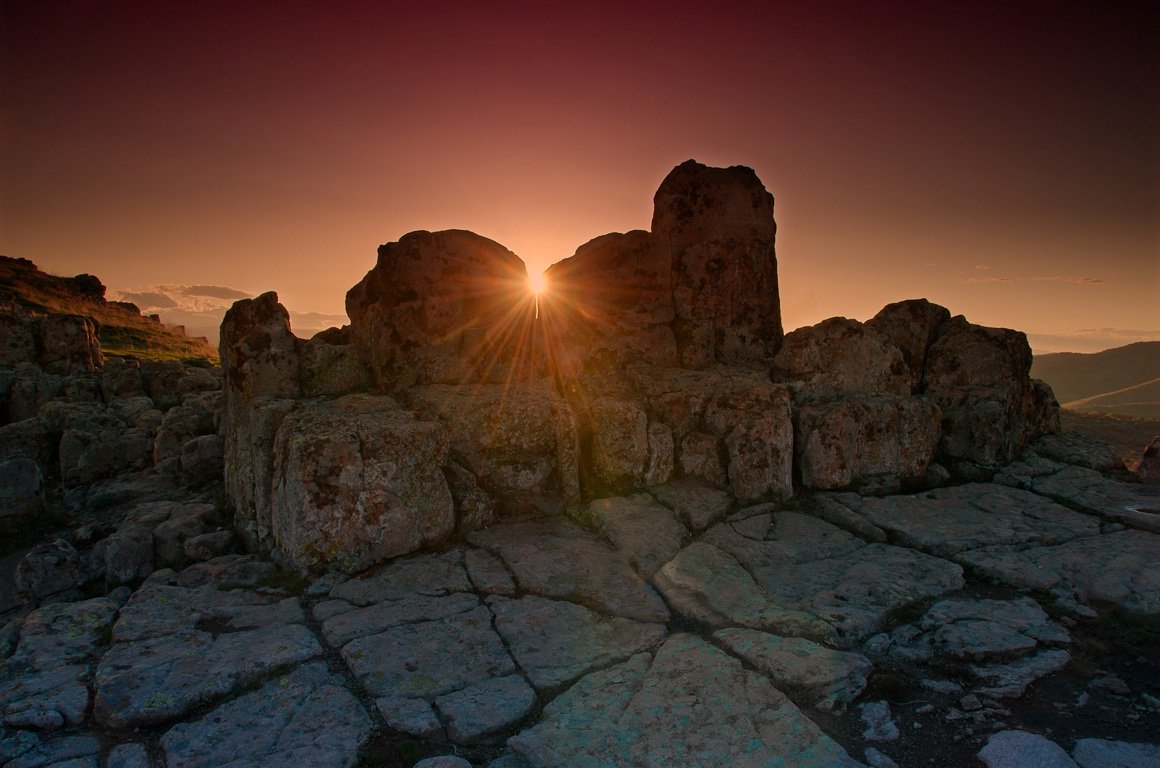
Kokino is one of the most remarkable and least visited archaeological sites in Macedonia — and one of the oldest astronomical observatories in the world.
Located in the northeastern part of the country, on a volcanic rock formation at over 1,000 metres altitude, Kokino is a Bronze Age ritual site dating back over 3,800 years. NASA has listed it among the most significant ancient observatories on Earth. Stone markers cut into the rock align precisely with the rising sun at the summer and winter solstices and the spring and autumn equinoxes — a feat of astronomical observation and engineering that still impresses researchers today.
Standing at Kokino on a clear day, looking out across the northeastern Macedonian landscape from a site that people have been visiting for almost four thousand years to track the movements of the sun, is a genuinely moving experience. The kind of place that puts everything in perspective.
It requires a car to reach and the road gets rough in the final approach, but the site itself is well-maintained and the views alone justify the journey. Go early in the morning if you can — the light on the rocks is extraordinary.
Kruševo — The Highest Town and the Home of Toše Proeski
Kruševo sits at over 1,200 metres above sea level — the highest town in Macedonia — in the mountains of the central west. It is a small, quiet town with wide streets, old stone houses, and a particular atmosphere of dignified stillness that comes from altitude and history in equal measure.
The town has a significant place in Macedonian history as the site of the Kruševo Republic — a short-lived uprising against Ottoman rule in 1903 that lasted just ten days before being crushed, but which became one of the founding moments of Macedonian national consciousness. The Makedonium monument on the hill above the town — a striking modernist structure that looks like something between a spaceship and a chrysalis — commemorates that uprising and houses a museum dedicated to it. The views from up there across the mountain ranges are spectacular.
But for many Macedonians, Kruševo means one thing above everything else: Toše Proeski.
Toše Proeski was the greatest vocalist and artist Macedonia has ever produced — a singer of extraordinary talent and genuine warmth who became beloved not just in Macedonia but across the entire former Yugoslav region. He died in a car accident in 2007 at the age of 26, and the grief that followed was unlike anything Macedonia had seen. He was from Kruševo, and the memorial house dedicated to him in his hometown is a deeply moving place — not just for fans of his music, but for anyone who wants to understand what he meant to a country and why that loss still resonates almost two decades later.
If you have never heard Toše Proeski’s music, listen before you go. Then visit Kruševo.
Kruševo is a drive from both Skopje and Ohrid and works well as a day trip or an overnight stop. In winter it gets significant snowfall and becomes a small ski destination. In summer it is cool, quiet, and completely beautiful.
What These Places Have in Common
None of these places are on the standard tourist itinerary. None of them have been built around the tourist industry. All of them offer something that the headline destinations — as wonderful as they are — cannot offer: the feeling of being somewhere that is still genuinely itself.
That feeling is what travel used to be, and what it is increasingly hard to find in Europe. In Macedonia, outside the main circuit, it is still entirely available.
Rent a car. Leave the main road occasionally. Stop when something looks interesting. Macedonia rewards that kind of travel more than almost anywhere else in the region.
👉 Compare car rental prices for exploring Macedonia
👉 Browse guided tours and day trips
Practical Notes
Getting there: All four destinations in this guide require a car to reach properly. Public transport exists to some of them but is infrequent and slow. Renting a car in Skopje for a day or two and combining two or three of these destinations into a road trip is the most practical and enjoyable approach.
When to go: All four are accessible in summer. Vevčani’s carnival is in January. Kokino is best in clear weather for the views. Kruševo is cooler than the rest of the country in summer — worth knowing if you are visiting during the hottest weeks.
Accommodation: Kruševo has small hotels and guesthouses for an overnight stay. Dojran has lakefront accommodation if you want to stay the night. Vevčani and Kokino are best as day trips.
FAQ
Do I need a guide to visit these places?
Not necessarily — all four are accessible independently with a car and a map or GPS. Kokino benefits from some context about what you are looking at, so a guided visit or doing some reading before you go will deepen the experience significantly.
Are these places suitable for families with children?
Yes. Dojran lake is excellent for families — calm water, good food, relaxed atmosphere. Vevčani’s springs are fascinating for children. Kruševo is very manageable. Kokino involves some uneven rocky terrain so younger children need supervision.
Can I combine these into a road trip?
Kokino is in the northeast, Dojran in the southeast, and Kruševo and Vevčani in the west — so combining all four in a single trip requires covering a lot of ground. Kruševo and Vevčani work very well together as a western Macedonia day trip from Ohrid. Kokino and Dojran are better combined with a wider eastern Macedonia loop from Skopje.
Disclosure
MKDGuide uses affiliate links to help keep this site free. If you book through our links, we may earn a small commission at no extra cost to you. All opinions are our own, based on real local knowledge of Macedonia.
Leave a Reply