
Updated 2026 · Budget Guide · 8 min read
There are places in Europe that look good in photos. Then there are places that make you stop walking, look around, and quietly wonder why nobody told you about this sooner.
Ohrid is the second kind.
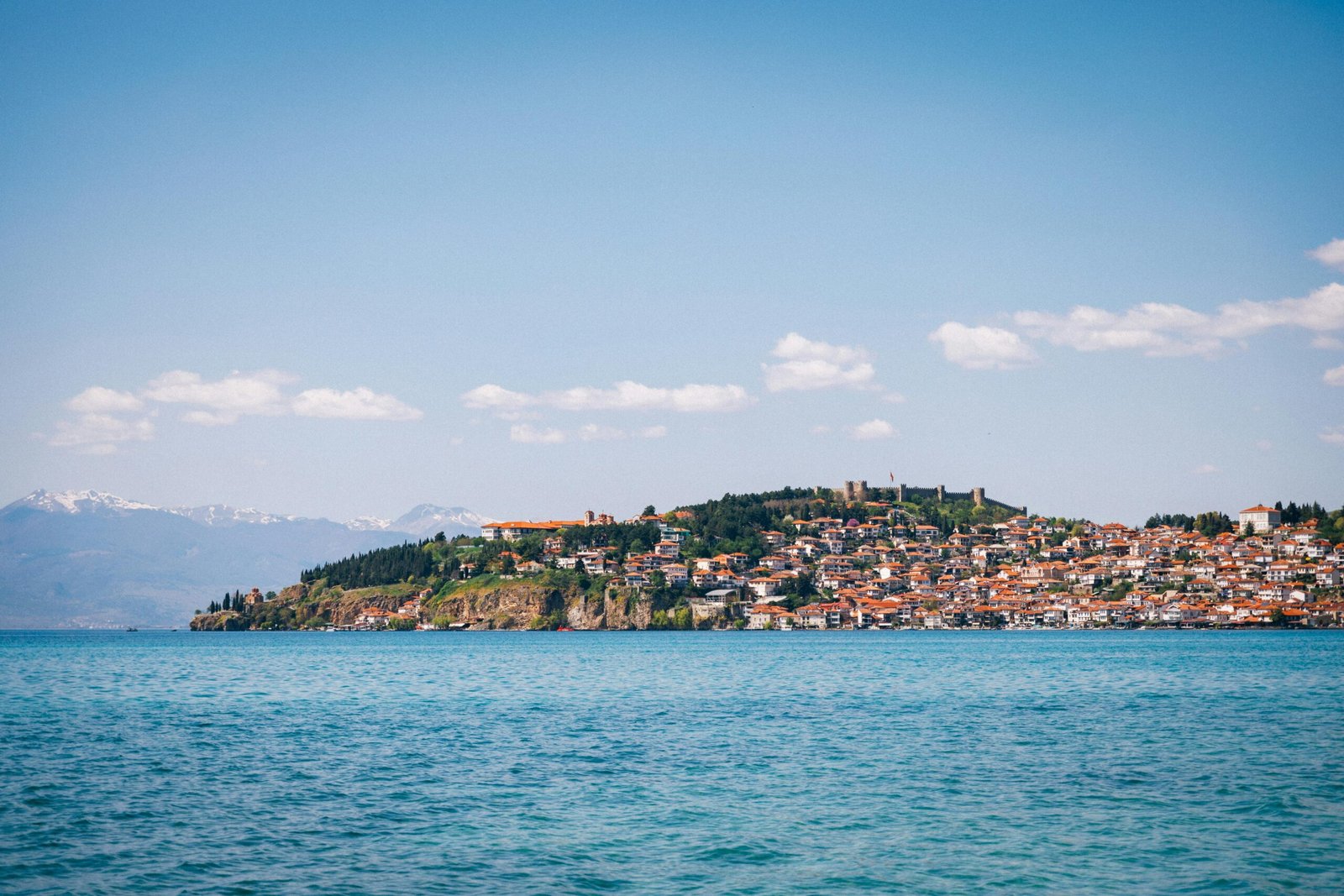
Sitting on the shores of one of the oldest and deepest lakes in the world, surrounded by mountains, dotted with Byzantine churches and ancient fortress walls, Ohrid is Macedonia’s most beloved destination — and one of the most genuinely beautiful places in the entire Balkans. In summer it comes fully alive, and if you time your visit right, it is close to perfect.
This is everything you need to know before you go.
In This Guide
- Why Ohrid in Summer?
- Best Time to Visit
- Must-See Spots in Ohrid
- What to Eat in Ohrid — The Local Food Guide
- Where to Stay
- Getting to Ohrid from Skopje
- Getting Around Ohrid
- Day Trips from Ohrid
- Practical Tips
FAQ
1. Why Ohrid in Summer?
Ohrid in summer is the closest thing Macedonia has to a Mediterranean resort — except it is on a lake, surrounded by mountains, steeped in three thousand years of history, and costs a fraction of what a comparable destination in Croatia or Greece would set you back. The lake water is extraordinarily clear and warm enough to swim in from June through September. The old town fills with life every evening — restaurants spill out onto cobbled streets, boats drift across the water, and the light on the lake at sunset is something you will not forget quickly. It is busy in July and August. It is worth it
2. Best Time to Visit Ohrid in Summer
All three summer months offer something different, and the right choice depends on what kind of trip you want.
July — Peak Summer, Fully Buzzing July is Ohrid at its most alive. The lake is warm, the old town is full, the restaurants and bars are buzzing every night, and the atmosphere is electric. It is the best month for people who want energy, nightlife, and the full summer resort experience. Book accommodation well in advance — good places fill up fast.
August — Hottest, Most Tourists August is the peak of peak season. Temperatures are at their highest — expect 35°C and above — and tourist numbers are at their maximum. The beaches get crowded, accommodation prices are at their highest, and the old town can feel busy. That said, the atmosphere is incredible and if you embrace it rather than fight it, August in Ohrid is a genuinely memorable experience. Book months ahead.
September — The Hidden Best Month September is the secret. The crowds thin out noticeably after the first week, prices drop, the lake is still warm enough to swim in, the weather is perfect — warm days, cool evenings — and the old town regains some of its quieter, more atmospheric character. For anyone with flexibility, September is the single best month to visit Ohrid. You get almost everything July and August offer, with significantly less competition for tables, sunbeds, and boat trips.
3. Must-See Spots in Ohrid
Church of Saint John at Kaneo
This is the most photographed spot in Macedonia — a small medieval church perched on a cliff directly above the lake, framed by mountains on every side. The postcard image of Ohrid. It is even more striking in person than in photos, particularly in the early morning or late afternoon when the light hits the water below it.
Go early if you want it to yourself. By mid-morning in July and August there will be people queuing for the same photo.
Saint Sophia Church
One of the finest examples of Byzantine architecture in the Balkans. Built in the 11th century, Saint Sophia contains medieval frescoes of remarkable quality and a sense of age and spiritual weight that is hard to describe. It has been a church, a mosque, and a concert hall at various points in its history — the layers of that story are visible in the building itself.
Entry is inexpensive and absolutely worth it.
The Old Town and Fortress Villa
Ohrid’s old town climbs the hill above the lake in a tangle of cobbled streets, Ottoman houses, small churches, and viewpoints that open up without warning to reveal the lake stretching out below. It is very walkable — you can cover the whole old town on foot in a morning — but the best approach is to slow down, get slightly lost, and let the streets take you where they want.
The fortress walls at the top — Tsar Samuel’s Fortress — date back to the 10th century and offer the best panoramic views in the city. The walk up is worth every step.
Monastery of Saint Naum
About 30 kilometres south of Ohrid, at the very southern end of the lake, the Monastery of Saint Naum is one of the most beautiful and peaceful places in Macedonia. Founded in the 9th century by Saint Naum himself — a disciple of Saints Cyril and Methodius — it sits directly on the lakeshore, surrounded by peacocks that roam freely across the grounds.
The springs that feed the lake here are crystal clear and the colours of the water are extraordinary. A boat trip from Ohrid to Saint Naum, with the monastery rising above the lake as you approach, is one of the great travel experiences in the Balkans.
4. What to Eat in Ohrid — The Local Food Guide
Ohrid has its own food identity built around the lake, and eating well here means eating local. Do not leave without trying these.
Pastrmka – Ohrid Trout
Pastrmka is the Ohrid trout — a species endemic to the lake, found nowhere else in the world. It has been eaten here for centuries and there is a reason it appears on every serious restaurant menu in the city. The flesh is delicate, subtly flavoured, and nothing like farmed trout from a supermarket. Grilled simply with lemon, olive oil, and local herbs, it is one of the finest fish dishes you will eat anywhere.
It is a protected species and fishing is regulated, so the trout you eat in Ohrid restaurants comes from certified sources. Eat it without guilt.
Carp and Catfish
The lake also yields excellent carp and catfish, both popular on local menus and both deeply tied to the cooking traditions of the region. Carp prepared in the Ohrid style — slow-cooked or baked — has a richness that pairs extraordinarily well with the local wines. Catfish, grilled or stewed, is another local staple that most tourists never think to order. Order it. You will not regret it.
Local fish and local wine, the essential combo
This is the pairing that defines eating in Ohrid. The wine regions of Macedonia — particularly Tikveš to the east — produce whites and rosés that were made to sit alongside freshwater fish. A glass of local white wine, a plate of grilled pastrmka, a view of the lake, and the late afternoon sun on the water. This is Ohrid at its best.
Ask the restaurant for a local wine recommendation with the fish. Any good restaurant in Ohrid will know exactly what to suggest.
Where to Eat
The old town has the highest concentration of good restaurants. The lakefront restaurants have the best views but can be slightly more tourist-facing in pricing. Walk one street back from the main waterfront and you will find restaurants where locals eat — better value, equally good food. Always ask what fish came in that day and order accordingly.
5. Where to Stay in Ohrid
Ohrid has accommodation options across every budget, from guesthouses in the old town to lakefront hotels with terraces over the water.
Old Town — Staying in the old town means you are walking distance from everything. The streets are cobbled and steep in places but the atmosphere more than compensates. Great for first-time visitors.
Lakefront — Hotels directly on the lake offer the views and the sound of water. Slightly more expensive but the morning experience of waking up to the lake is worth it for many travellers.
Outside the centre — Slightly removed from the main tourist area, often better value, and perfectly easy to reach on foot or by a short taxi ride.
Book early for July and August — particularly for the old town and lakefront properties. September visitors have significantly more flexibility.
6. Getting to Ohrid from Skopje
The bus from Skopje to Ohrid is the standard way to make the journey and it costs 500–800 MKD (€8–13) one way. The trip takes approximately 3 hours and the road through the mountains — particularly the section descending toward the lake — is genuinely scenic. On a clear day the first glimpse of the lake from above is a moment worth waiting for.
Buses run regularly throughout the day. The Skopje bus station is the departure point.
Renting a car gives you more flexibility — particularly useful if you want to visit Saint Naum, explore the Albanian side of the lake, or stop at villages along the way. The drive takes around 2.5 to 3 hours.
7. Getting Around Ohrid
Ohrid is very walkable. The old town, the main beaches, the Church of Saint John at Kaneo, Saint Sophia, and the fortress are all reachable on foot from the centre. The town is compact enough that you rarely need any transport for the main sights.
For the Monastery of Saint Naum, 30km south, you will need a boat trip, a taxi, or a car. Boat trips from the old town harbour are the most atmospheric option and the journey down the lake is part of the experience.
8. Day Trips from Ohrid
Monastery of Saint Naum — The most popular day trip from Ohrid, and rightly so. Allow half a day minimum.
Prespa Lake — Just over the mountains from Ohrid, Lake Prespa is shared between Macedonia, Albania, and Greece. Dramatically beautiful, almost entirely untouched by tourism, and a complete contrast to the bustle of Ohrid in summer.
Bitola — Macedonia’s second city, about an hour from Ohrid. Wide Ottoman boulevards, excellent café culture, and the ancient ruins of Heraclea Lyncestis just outside the city. A very easy and worthwhile day trip.
Galičica National Park — The mountain range between Ohrid and Prespa lakes. Hiking, incredible views over both lakes simultaneously from the ridge, and wildlife including bears and wolves in the more remote areas.
9. Practical Tips for Ohrid in Summer
Book accommodation early. Especially for July and August. Good places in the old town and on the lakefront go months in advance.
Go to Kaneo early. The Church of Saint John at Kaneo at 7am in summer is a completely different experience from the same spot at 11am. Worth the early start.
Eat the local fish. Pastrmka, carp, catfish. Pair with local white wine. This is not optional.
Take the boat to Saint Naum. The road works too, but arriving by water is the right way to approach it.
September is underrated. If you have flexibility, September gives you Ohrid at close to its best with significantly fewer people.
Swim early or late. The main beaches get crowded midday in August. An early morning swim before the crowds arrive, or an evening swim as the day cools, is a completely different experience.
Carry cash for smaller restaurants and boats. Cards are widely accepted in hotels and larger restaurants but smaller lakeside spots and boat
Disclosure: MKGuide uses affiliate links to help keep this site free. All opinions are our own, based on real local knowledge of Macedonia.
Leave a Reply