
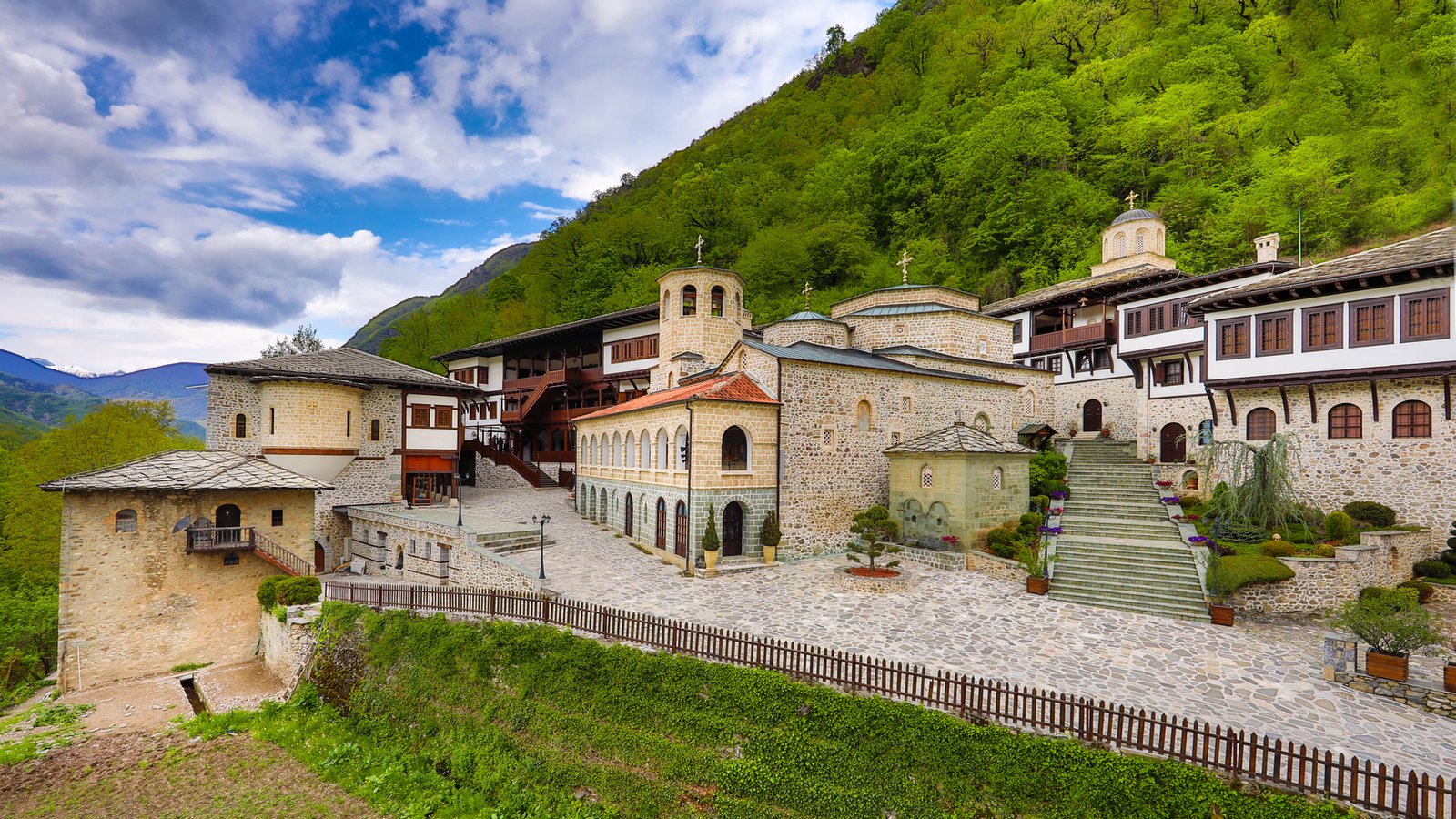
A centuries-old monastery set high above the Radika Valley, known for its extraordinary wood carvings, deep spiritual atmosphere, and breathtaking mountain surroundings.
A Journey Into the Mountains of Western Macedonia
The road to St. Jovan Bigorski Monastery feels like a journey into another world. Following the Radika River through the heart of western Macedonia, the landscape becomes increasingly dramatic — steep mountains rise on both sides, dense forests cover the slopes, and the sound of the river echoes through the valley.
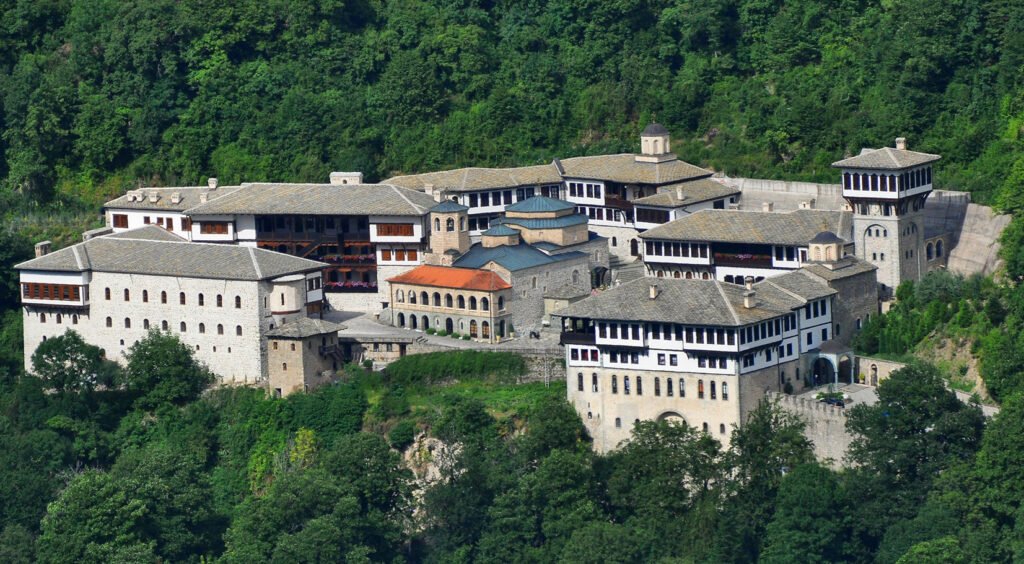
Then, almost unexpectedly, the monastery appears high above the canyon. Its stone walls and red roofs stand out against the rugged terrain, creating a powerful first impression. The air feels quieter here, the pace slower, as if the place exists outside of time.
For travelers exploring Mavrovo National Park, this monastery often becomes one of the most memorable stops along the way.
A Thousand Years of History and Faith
St. Jovan Bigorski Monastery, dedicated to St. John the Baptist, is believed to have been founded in 1020 during the Byzantine period by the monk John of Debar.
Over the centuries, the monastery has gone through periods of destruction and renewal. It suffered damage during Ottoman rule but was later restored in the 18th and 19th centuries, growing into an important spiritual and cultural center for Orthodox Christianity in the region.
The name “Bigorski” comes from the type of stone called bigor, a porous limestone used in the construction of the monastery. This material gives the complex its distinct appearance and ties it closely to the natural environment around it.
Even today, the monastery remains active, inhabited by monks who continue the traditions and spiritual life that have defined this place for centuries.
What You Can See Inside the Monastery
Stepping inside Bigorski Monastery feels like entering a quiet mountain sanctuary.
The main church is dedicated to St. John the Baptist and holds one of the greatest artistic treasures in the Balkans — a magnificent wood-carved iconostasis from the early 19th century. Created by master craftsmen from the Mijak region, it is considered one of the finest examples of woodcarving in Orthodox Christian art.
Every detail is carefully carved, depicting biblical scenes, saints, and symbolic elements with extraordinary precision.
Beyond the church, the monastery complex includes traditional stone buildings, peaceful courtyards, monks’ quarters, and balconies overlooking the Radika Canyon. The surrounding mountains create a strong sense of isolation and calm, making it easy to understand why this location was chosen centuries ago.
Many visitors spend time simply walking through the courtyard, taking in the silence and the views.
Legends, Faith, and Living Tradition
One of the most well-known stories connected to the monastery is the legend of the miraculous icon of St. John the Baptist.
According to tradition, the icon was found in the waters of the Radika River and later brought to the monastery. Over time, it became associated with healing and spiritual protection, attracting pilgrims from across the region.
For generations, people have come here seeking blessings, guidance, or a moment of peace.
The monastery is also deeply connected to the Mijak people, known for their craftsmanship, architecture, and strong cultural identity, which is reflected in the artistic details found throughout the complex.
Best Time to Visit
St. Jovan Bigorski Monastery offers a different experience in every season.
In spring and summer, the surrounding landscape is green and vibrant, perfect for combining the visit with hikes in Mavrovo National Park or trips to nearby villages.
Autumn brings warm colors to the forests along the Radika Valley, creating one of the most photogenic scenes in Macedonia.
During winter, the monastery transforms into a quiet retreat, especially when snow covers the mountains and the entire area feels even more peaceful and isolated.
Many travelers combine their visit with nearby destinations such as Mavrovo Lake, the traditional village of Galichnik, and the scenic Radika Canyon.
Why This Monastery Feels Like a Hidden Gem
Despite its historical and cultural importance, St. Jovan Bigorski Monastery remains relatively unknown to international tourists.
Unlike crowded landmarks, it still preserves a sense of authenticity, spirituality, and calm. It is a place where history, art, religion, and nature come together naturally.
Few places in the Balkans offer such a powerful combination of mountain scenery, medieval heritage, and living spiritual tradition.
For many visitors, it doesn’t feel like a typical tourist destination, but rather like discovering something deeply personal and meaningful.
Final Thoughts
St. Jovan Bigorski Monastery is more than just a historical site. It is a place that reflects the spiritual and cultural depth of Macedonia, set within one of the most beautiful landscapes in the country.
For travelers who want to go beyond the usual destinations, this monastery offers something rare — silence, history, and a strong connection to the past.
Hidden above the Radika Valley, it remains one of Macedonia’s most inspiring places, waiting quietly to be discovered.
Leave a Reply