
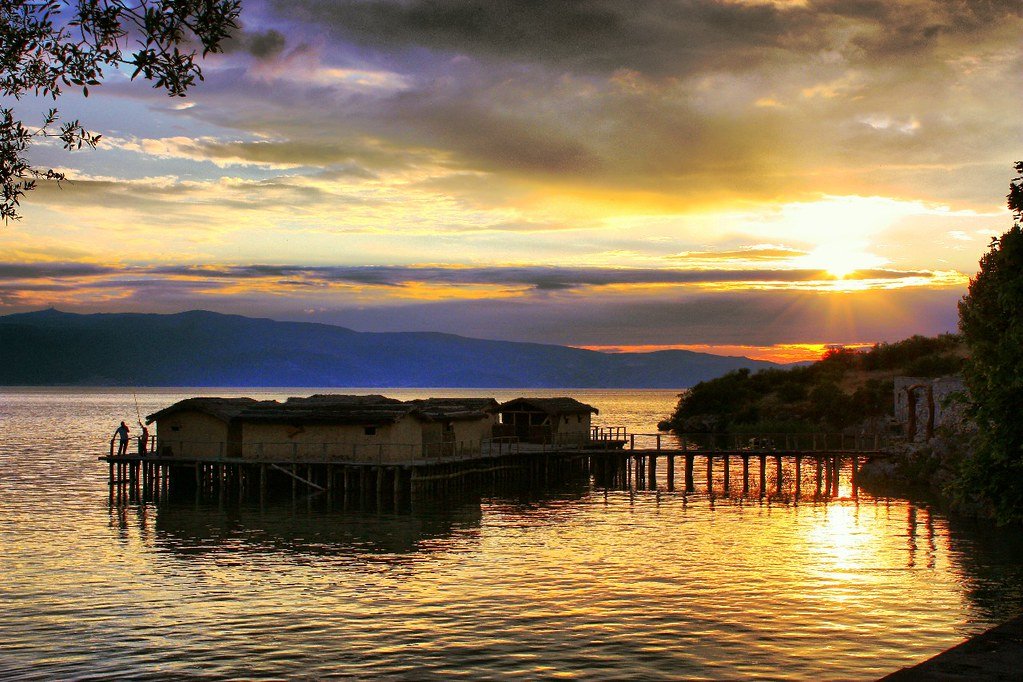
A prehistoric settlement rebuilt above the crystal waters of one of Europe’s oldest lakes.
Macedonia’s Hidden Stories Beneath the Surface
Traveling through Macedonia often feels like turning the pages of a living history book. Every town, lake, and mountain carries stories from centuries past, but beyond the famous churches and beaches of Ohrid lies a much older world waiting to be discovered. Along the shores of Lake Ohrid, one remarkable site offers a rare glimpse into prehistoric life — not hidden in the mountains, but built directly above the water.
Known today as the Bay of Bones Museum, this reconstructed settlement is one of the most unique places in Macedonia, offering a completely different experience from traditional sightseeing.
A Prehistoric Village Above the Water
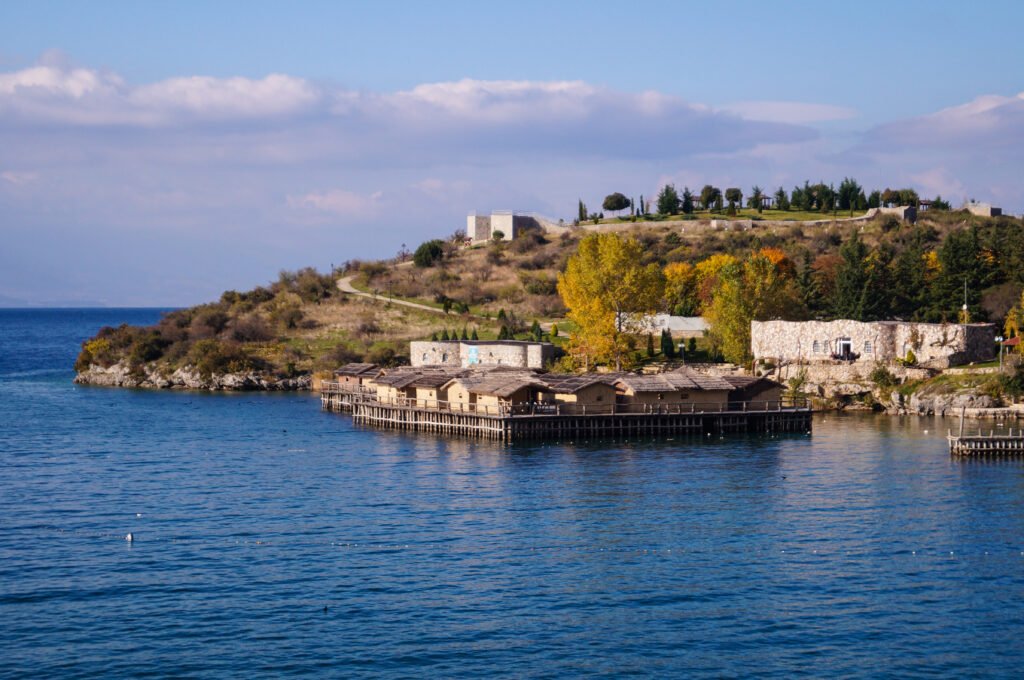
Located on the southern shores of Lake Ohrid, the Bay of Bones recreates a settlement that existed more than 3,000 years ago. The name comes from the large number of animal bones and artifacts discovered during underwater excavations, revealing that ancient communities once built their homes on wooden platforms supported by hundreds of piles driven into the lakebed.
Today, visitors can walk along wooden bridges connecting reconstructed houses filled with tools, pottery, and objects that bring prehistoric life into focus.
Walking Through Ancient Life
Stepping into the settlement feels like entering another era. Inside the wooden houses, clay pots, primitive hunting tools, and fishing equipment recreate a vivid picture of everyday life thousands of years ago. It’s a rare opportunity to experience history not through glass displays, but by physically walking through it.
For those interested in archaeology and ancient cultures, this is one of the most fascinating experiences in Macedonia.
One of Europe’s Oldest Lakes
The setting makes the experience even more powerful. Lake Ohrid is one of Europe’s oldest lakes, estimated to be over one million years old, and recognized as a UNESCO World Heritage site. Its crystal-clear waters, surrounding mountains, and unique biodiversity create a landscape that feels timeless.
Standing on the wooden walkways while looking out over the lake creates a rare connection between nature and human history.
A Story Discovered Underwater
The story of the Bay of Bones began beneath the surface. Archaeologists and divers discovered hundreds of wooden piles, pottery fragments, and bones preserved in the lakebed, uncovering the remains of an ancient stilt village. The site was later reconstructed to give visitors a clearer understanding of how these early communities lived and adapted to life on the water.
A Unique Stop Near Ohrid
Located just 15 minutes south of Ohrid, the museum is an easy and worthwhile stop when exploring the region. Many visitors combine it with nearby attractions like the Monastery of Saint Naum, scenic viewpoints along the lake, or a relaxing walk by the shore.
Because of its story and location, it remains one of the most memorable places to visit around Lake Ohrid.
Taste Ohrid After a Day of Exploring
After exploring history and nature, the experience continues with food. Lakeside restaurants serve the famous Ohrid trout, one of the region’s most traditional dishes, along with fresh salads, homemade bread, and local wines.
Sitting by the water, enjoying simple but authentic food, adds another layer to the experience — one that connects the past with the present.

Conclusion: Discover the Ancient Side of Lake Ohrid
While Ohrid is known for its old town and churches, the lake holds stories that go back thousands of years. The Bay of Bones offers a rare chance to step into that world and experience how people once lived in harmony with the water.
For anyone searching for unique places in Macedonia, this is more than a visit — it’s a journey through time. And after walking through a 3,000-year-old village, a quiet meal by the lake might be the perfect way to end it.
Leave a Reply