
The Best Macedonian Food You Have to Try — A Local’s Guide
Updated 2025 · Food Guide · 9 min read
Macedonian food does not get the attention it deserves. While the cuisines of neighbouring Greece, Turkey, and Serbia have found their way onto menus across Europe, Macedonia’s cooking remains largely unknown outside the region — which means that when you arrive and sit down to your first proper Macedonian meal, the surprise is total and very, very pleasant. This is food built on slow cooking, fresh local ingredients, wood fire, clay pots, and generations of tradition. It is generous, unpretentious, and deeply satisfying. Here is everything you need to eat and drink before you leave.
The Essential Dishes
Tavče Gravče — The National Dish
If you eat one thing in Macedonia, make it this. Tavče gravče is baked beans cooked in a clay pot with onions, peppers, and spices, finished in a wood-fired oven until the top is golden and the beans inside are soft, rich, and smoky. It sounds simple. It is not simple. It is one of those dishes where the quality of the ingredients and the patience of the cooking process produce something far greater than the sum of its parts. Every Macedonian family has their own version. Every restaurant that serves it properly will tell you theirs is the best. They are all right. Order it wherever you see it.
Kebapi — Grilled Minced Meat
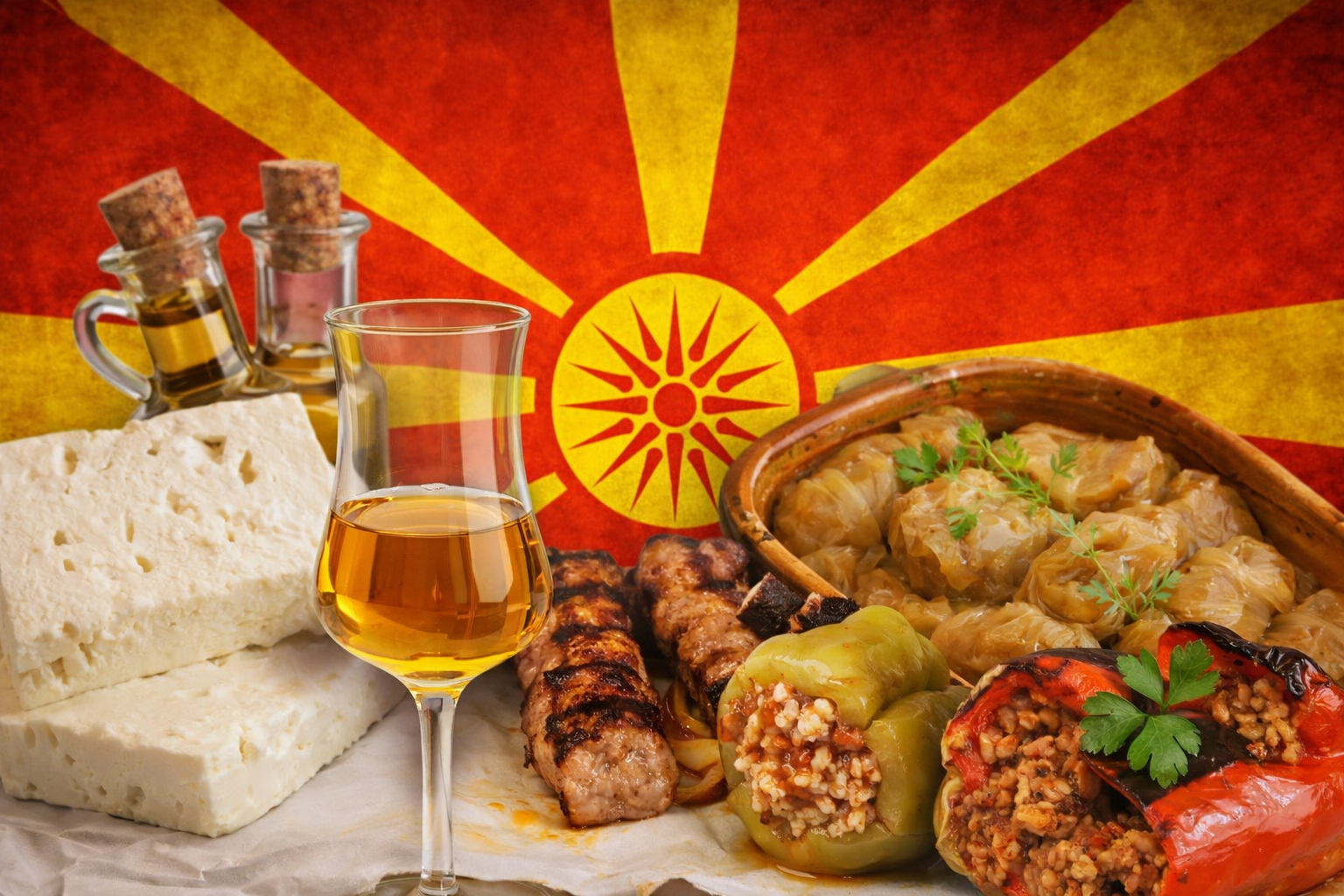
Kebapi are small, finger-shaped grilled sausages made from minced beef and lamb, seasoned simply and cooked over charcoal until the outside is charred and the inside is juicy. They are served with fresh bread, raw onion, and ajvar — the roasted pepper spread that accompanies almost everything in Macedonia. This is street food, comfort food, and late-night food all at once. You will find kebapi everywhere from the Old Bazaar in Skopje to small towns across the country. The best ones come from places that do nothing else — small grills that have been making the same recipe for decades.
Burek — The Morning Non-Negotiable
Burek is the Macedonian breakfast institution. A flaky, layered pastry filled with white cheese, minced meat, or spinach, baked fresh every morning and sold by the slice or by weight. Eaten warm, ideally straight from the tray, with a glass of cold ayran alongside it. A good burek from a proper bakery in the Old Bazaar or a local neighbourhood is one of the great simple food experiences Macedonia offers. It costs almost nothing. It is absolutely delicious. Do not skip breakfast here.
Ajvar — The Spread That Goes on Everything
Ajvar is roasted red pepper spread made every autumn across Macedonia when the peppers come in, roasted over open fires, peeled by hand, ground and cooked down into a thick, smoky, slightly sweet condiment that Macedonian families produce in enormous quantities and eat all year. You will encounter ajvar on almost every table in Macedonia. It goes on bread, alongside grilled meat, with cheese, with burek, with everything. Good ajvar is one of those flavours that you will spend years trying to find again after you leave. Buy a jar to take home. Buy several.
Turli Tava — Mixed Meat and Vegetable Stew
Turli tava is a slow-cooked stew of mixed meats, usually lamb, pork, and veal, with vegetables, baked together in a clay pot until everything has merged into something deeply flavourful and completely comforting. It is winter food at its finest, rich, warming, and the kind of dish that improves if you sit over it slowly.
Letna Manđa with White Local Cheese — Summer on a Plate
Letna manđa is a lighter, vegetable-forward summer dish made with fresh seasonal vegetables cooked together slowly, typically served alongside a generous portion of local white cheese. Macedonian white cheese is sharper and more complex than standard feta, and the combination of the stewed vegetables and the cold, crumbled cheese is one of those perfect pairings that only makes sense in the place where both things are made. This is summer Macedonian cooking at its best — fresh, simple, and completely of its season.
Sarma — Stuffed Cabbage Rolls
Sarma are cabbage leaves stuffed with a mixture of minced meat and rice, rolled tightly and slow-cooked in a tomato-based sauce until the cabbage is completely tender and the filling has absorbed all the surrounding flavours. They are a staple of Macedonian home cooking and the kind of dish that every grandmother makes differently and every family considers their own version the definitive one. When sarma appears on a restaurant menu, order it. When a Macedonian family offers it to you, eat as much as you possibly can.
Polneti Piperki — Stuffed Peppers
Stuffed peppers are deeply embedded in Macedonian cooking. Whole peppers are filled with a mixture of minced meat and rice, baked until soft and slightly charred, with a rich, aromatic filling inside. They are served as a main course, often with a side of yogurt or fresh bread, representing exactly what Macedonian cooking does best — simple ingredients treated with patience and care.
Turshija — Pickled Vegetables (A Winter Treasure)
Turshija is Macedonia’s preserved vegetable tradition — vegetables pickled in brine and vinegar, prepared every autumn and eaten through winter. Cabbage, peppers, cauliflower, carrots, and green tomatoes are stored in large jars in almost every household. If you visit in winter or late autumn, turshija will appear on tables — sharp, crunchy, and the perfect contrast to heavier dishes.
What to Drink
Rakija — The Fruit Brandy
Rakija is the Balkan spirit — a fruit brandy distilled from plums, grapes, quinces, or other fruits. It is strong, clear, and serious. In Macedonia it is drunk as a welcome, as a toast, before meals, after meals, and during celebrations. Do not refuse rakija when offered. It is a gesture of hospitality. Drink it slowly and appreciate that it is homemade, local, and deeply traditional.
Mastika — The Anise Spirit
Mastika is Macedonia’s anise-flavoured spirit, similar to ouzo or raki but with its own distinct character. It is usually served chilled and has a clean, aromatic taste that works both as an aperitif and after-dinner drink. It is one of the most distinct Macedonian drinking experiences.
Vranec — The Red Wine You Need to Know
Vranec is Macedonia’s indigenous red grape and the flagship of the country’s wine industry. It produces bold, full-bodied wines with deep colour, strong tannins, and flavours of dark fruit and spice. The Tikveš region produces some of the best examples. Macedonian wine remains undervalued internationally, meaning you can drink excellent bottles at very reasonable prices. Always order local red.
Where to Eat in Skopje
Both the Old Bazaar and neighbourhood restaurants offer excellent Macedonian food. The Old Bazaar provides atmosphere, history, and traditional dining in streets that have barely changed for centuries. Neighbourhood restaurants in areas like Debar Maalo, Karpoš, and Aerodrom often serve equally good or better food at lower prices, with authentic local energy. The best advice is simple: avoid places with overly touristy menus and choose spots where locals eat regularly.
FAQ — Macedonian Food
Is Macedonian food similar to Greek food? Macedonian cuisine shares some ingredients with Greek food but has its own identity influenced by Ottoman, Slavic, and local traditions. Dishes like tavče gravče, ajvar, and sarma are uniquely Macedonian.
Is Macedonian food suitable for vegetarians? Yes. Tavče gravče, letna manđa, ajvar, salads, grilled vegetables, and cheeses make it easy for vegetarians to eat well.
Can I buy Macedonian food products to take home? Yes. Ajvar is the most popular item, along with wine, rakija, and mastika, all widely available across the country.
Disclosure: MKGuide uses affiliate links to help keep this site free. All opinions are our own, based on real local knowledge of Macedonia.
Leave a Reply